


Projects.
May. 7th, 2026 10:48 pm![[personal profile]](https://www.dreamwidth.org/img/silk/identity/user.png) hannah
hannahIn preparation for Disclosure Day next month, I'm going through all of Steven Spielberg's movies I haven't yet seen. I know there's some good ones in there, so I started on the ones I've largely been avoiding because I know they're not his better outings. Let me say I don't think it's at all possible he's got something worse than Ready Player One. It might be better than the book, and there's only so far you can polish a turd. Though I'll give it credit for highlighting the difference mindsets of curatorial and transformative fandom in a way that's impossible to argue with.
Adjusting to the new schedule's going well enough. As with many jobs, getting a good night's sleep beforehand is key to a good day. I'm hoping to be done by July, which is why I told my client it might take me until August.
Adjusting to the new schedule's going well enough. As with many jobs, getting a good night's sleep beforehand is key to a good day. I'm hoping to be done by July, which is why I told my client it might take me until August.


Wednesday Reading Meme for May 7 2026 which is a Thursday
May. 7th, 2026 10:52 pmkitewithfishI am getting this done ! I am completing the task!
What I Read
The Other Bennet Sister – Janice Hadlow – What an excellent book! Really well constructed story and deeply enjoyable arc. I think the romance was nicely done, but the center of the book was reflection – Mary the least loved Bennet sister gets to really take her time and observe the people in her life and know them deeply. It felt slightly self-indulgent (Mary is indeed going to the garden to eat worms) and yet I am here as the self and I am being indulged.
The Ancient Magus’ Bride Vols 1, 2, 3 – Kore Yamazaki – A fun read! Interesting world building and a slow burn romance between Chise and Elias Ainswroth, a horse/deer-skulled maybe human magus who bought her (not from One Direction!) in order to save her life and also marry her, maybe, at some point? It’s also deeply indulgent to the exact kind of big symbolic magic that I love, and gives a lot of time to the slow unfolding of their connection and what Chise’s magical powers will do. The story with the cats has been my favorite so far, but the Succubus in love with the random farmer who can’t see her at all is also a sweet tragedy. Really enjoying it.
I will say, I feel some conflict about one of the villains (so far) being revealed as the folkloric character of The Wandering Jew. Particularly because he’s a villain, and secondarily because I have no concept of how this character is understood by the author or by a Japanese audience, who are largely not dealing with the kind of hegemonic pressures to be Christian that shaped the folklore around that character. I weirdly adored the way that character trope was used in A Canticle for Leibowitz, because he was so very much Just Some Guy, and in particular, still identifiably, cantankerously Jewish in the face of being immortal, in a world where we only otherwise see Christians. So. I'm putting in a pin in that character for now.
AMB is interesting to read in context of My Happy Marriage, which also features a young woman with hidden magical powers escaping an uncaring/abusive family to a Perfectly Arranged Marriage. In the context of what Spouse is reading, this led to a discussion about the nature of isekai (a favorite Spousal genre) and the idea of different kinds of escape. Romance the genre often has an element of escapism baked in, and it’s sort of odd to think that some people in these novels are getting a Person to whisk them away to another magical world where they are treasured and important as a bride, and other people are getting hit by a bus.
What I’m Reading
The Everlasting by Alix E Harrow – A romantic and Romantic story. I love Sir Una Everlasting and I love Owen Mallory and the loving depiction of his flaws and how he becomes a useful idiot to a certain kind of patriotism that he also clearly sees thru and yet and yet and yet.
Platform Decay – Martha Wells – New Murderbot! No spoilers! I’m having a good and also bad time!
What I’ll Read Next
SciFi/Fantasy Book Club
Tomb of Dragons Katherine Addison - reread
Necromancy Book Club
The Everlasting Alix E. Harrow
The Isle in the Silver Sea Tasha Suri
Platform Decay (murderbot 8) Martha Wells
Ancillary Justice Ann Leckie
Hugo nominations!
Novels
A Drop of Corruption by Robert Jackson Bennett (Del Rey; Hodderscape) - read, it was great
Death of the Author by Nnedi Okorafor (William Morrow; Gollancz) - know the author, know nothing about this
Shroud by Adrian Tchaikovsky (Tor UK; Orbit US) - haven't read this, looking forward to it
The Everlasting by Alix E. Harrow (Tor US; Tor UK) - already on the to-read list
The Incandescent by Emily Tesh (Tor US; Orbit UK) - read, it was great (tho a bit obvious)
The Raven Scholar by Antonia Hodgson (Orbit US; Hodderscape)- never even heard of this one
Novellas
Automatic Noodle by Annalee Newitz (Tordotcom)
Cinder House by Freya Marske (Tordotcom; Tor UK) - read it, very interesting
Murder by Memory by Olivia Waite (Tordotcom)
The River Has Roots by Amal El-Mohtar (Tordotcom; Arcadia UK)
The Summer War by Naomi Novik (Del Rey US; Del Rey UK)
What Stalks the Deep by T. Kingfisher (Nightfire; Titan UK) -read it, solid, not a standalone without the first two novellas
The other categories also merit attention but the funny thing is just the movies - I have already seen all of them except Mickey 17.
What I Read
The Other Bennet Sister – Janice Hadlow – What an excellent book! Really well constructed story and deeply enjoyable arc. I think the romance was nicely done, but the center of the book was reflection – Mary the least loved Bennet sister gets to really take her time and observe the people in her life and know them deeply. It felt slightly self-indulgent (Mary is indeed going to the garden to eat worms) and yet I am here as the self and I am being indulged.
The Ancient Magus’ Bride Vols 1, 2, 3 – Kore Yamazaki – A fun read! Interesting world building and a slow burn romance between Chise and Elias Ainswroth, a horse/deer-skulled maybe human magus who bought her (not from One Direction!) in order to save her life and also marry her, maybe, at some point? It’s also deeply indulgent to the exact kind of big symbolic magic that I love, and gives a lot of time to the slow unfolding of their connection and what Chise’s magical powers will do. The story with the cats has been my favorite so far, but the Succubus in love with the random farmer who can’t see her at all is also a sweet tragedy. Really enjoying it.
I will say, I feel some conflict about one of the villains (so far) being revealed as the folkloric character of The Wandering Jew. Particularly because he’s a villain, and secondarily because I have no concept of how this character is understood by the author or by a Japanese audience, who are largely not dealing with the kind of hegemonic pressures to be Christian that shaped the folklore around that character. I weirdly adored the way that character trope was used in A Canticle for Leibowitz, because he was so very much Just Some Guy, and in particular, still identifiably, cantankerously Jewish in the face of being immortal, in a world where we only otherwise see Christians. So. I'm putting in a pin in that character for now.
AMB is interesting to read in context of My Happy Marriage, which also features a young woman with hidden magical powers escaping an uncaring/abusive family to a Perfectly Arranged Marriage. In the context of what Spouse is reading, this led to a discussion about the nature of isekai (a favorite Spousal genre) and the idea of different kinds of escape. Romance the genre often has an element of escapism baked in, and it’s sort of odd to think that some people in these novels are getting a Person to whisk them away to another magical world where they are treasured and important as a bride, and other people are getting hit by a bus.
What I’m Reading
The Everlasting by Alix E Harrow – A romantic and Romantic story. I love Sir Una Everlasting and I love Owen Mallory and the loving depiction of his flaws and how he becomes a useful idiot to a certain kind of patriotism that he also clearly sees thru and yet and yet and yet.
Platform Decay – Martha Wells – New Murderbot! No spoilers! I’m having a good and also bad time!
What I’ll Read Next
SciFi/Fantasy Book Club
Tomb of Dragons Katherine Addison - reread
Necromancy Book Club
The Everlasting Alix E. Harrow
The Isle in the Silver Sea Tasha Suri
Platform Decay (murderbot 8) Martha Wells
Ancillary Justice Ann Leckie
Hugo nominations!
Novels
A Drop of Corruption by Robert Jackson Bennett (Del Rey; Hodderscape) - read, it was great
Death of the Author by Nnedi Okorafor (William Morrow; Gollancz) - know the author, know nothing about this
Shroud by Adrian Tchaikovsky (Tor UK; Orbit US) - haven't read this, looking forward to it
The Everlasting by Alix E. Harrow (Tor US; Tor UK) - already on the to-read list
The Incandescent by Emily Tesh (Tor US; Orbit UK) - read, it was great (tho a bit obvious)
The Raven Scholar by Antonia Hodgson (Orbit US; Hodderscape)- never even heard of this one
Novellas
Automatic Noodle by Annalee Newitz (Tordotcom)
Cinder House by Freya Marske (Tordotcom; Tor UK) - read it, very interesting
Murder by Memory by Olivia Waite (Tordotcom)
The River Has Roots by Amal El-Mohtar (Tordotcom; Arcadia UK)
The Summer War by Naomi Novik (Del Rey US; Del Rey UK)
What Stalks the Deep by T. Kingfisher (Nightfire; Titan UK) -read it, solid, not a standalone without the first two novellas
The other categories also merit attention but the funny thing is just the movies - I have already seen all of them except Mickey 17.
Dotted Cloud Sunset
May. 7th, 2026 08:37 pmyourlibrarian posting in ![[community profile]](https://www.dreamwidth.org/img/silk/identity/community.png) common_nature
common_nature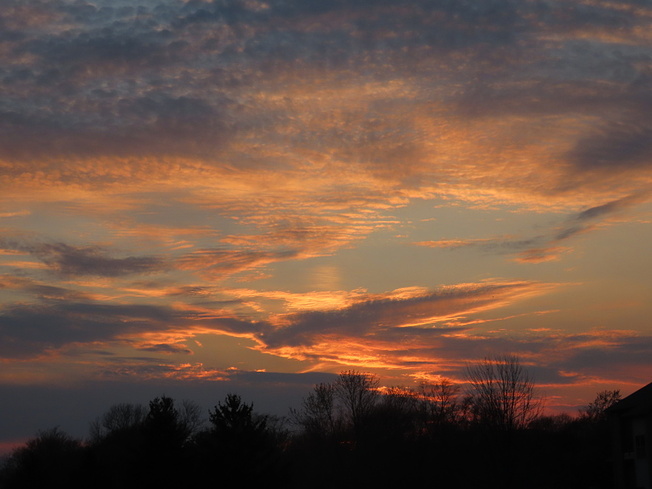
A recent sunset seemed to be highlighting the dotted clouds in the area, which made the sky look more patterned than usual.
( Read more... )


Happy World Password Day!
May. 7th, 2026 08:23 pmpetraTime to update your AO3 password. It can now be 72 characters long.
Here, have a website that counts characters.
So far my favorite possible maximal password I won't use is:
Little pig little pig let me in! Not by the hair on my chinny-chin-chin!
(Sorry about the lack of vocative commas, but 72 is a harsh mistress.)
If you like poetry, there's always:
Whose woods these are I think I know. His house is in the village though
Bring me your favorite 72-character phrase that you Won't use as an AO3 password!
Here, have a website that counts characters.
So far my favorite possible maximal password I won't use is:
Little pig little pig let me in! Not by the hair on my chinny-chin-chin!
(Sorry about the lack of vocative commas, but 72 is a harsh mistress.)
If you like poetry, there's always:
Whose woods these are I think I know. His house is in the village though
Bring me your favorite 72-character phrase that you Won't use as an AO3 password!
Daily Check-In
May. 7th, 2026 08:30 pmmecurtin posting in fandom_checkinThis is your check-in post for today. The poll will be open from midnight Universal or Zulu Time (8pm Eastern Time) on Thursday, May 7, to midnight on Friday, May 8 (8pm Eastern Time).
Please, talk about how things are going for you in the comments, ask for advice or help if you need it, or just discuss whatever you feel like.
Poll #34576 Daily check-in poll
Open to: Access List, detailed results viewable to: Access List, participants: 11
How are you doing?
I am OK
5 (50.0%)
I am not OK, but don't need help right now
5 (50.0%)
I could use some help
0 (0.0%)
How many other humans live with you?
I am living single
5 (45.5%)
One other person
2 (18.2%)
More than one other person
4 (36.4%)
Please, talk about how things are going for you in the comments, ask for advice or help if you need it, or just discuss whatever you feel like.

Reading Wednesday 2: Thursday Boogaloo
May. 7th, 2026 08:26 pmtroisoiseauxSince my last update in War and Peace (yesterday), I'm back to The Great Comet of 1812 territory with the scene that's the source for "No One Else"— interestingly, it's Natasha's song in the musical but Andrei's experience in the book, after seeing Natasha for the first time while visiting the Rostovs on business and feeling the first stirrings that life might be worth actually living again, post-Austerlitz and post-Lise: First time I heard your voice / Moonlight burst into the room vs.
(On the other hand, the lyric I feel like putting my arms around my knees / and squeezing tight as possible / And flying away is an almost verbatim quote from Natasha, and the differences might only be in translation.)
I also forgot to mention that I've turned back to China Miéville's Three Moments of an Explosion, a collection of short stories that mostly take either a frog-in-boiling-water approach—you'll start out reading about a couple on vacation, or a therapist who's kind of unhealthily overinvested in one of her patients but in a normal way, and then halfway through it slips into folk horror, or a world where therapists are also assassins ("Sometimes the externalized trauma-vectors in dysfunctional interpersonal codependent psychodynamics are powerful enough that more robust therapeutic intervention is necessary"); I very nearly laughed out loud on the metro at the latter twist— or a peeling-the-onion one, where it starts out in a world that is overtly not our own and the parameters reveal themselves, slowly, as you keep reading. ( ... ) I'm a little over halfway through, although I did end up skipping one story after very quickly realizing that it was not a flavor of horror I had the stomach to read.
As soon as he opened the shutters the moonlight, as if it had long been watching for this, burst into the room. He opened the casement. The night was fresh, bright, and very still. . . .
His room was on the first floor. Those in the rooms above were also awake. He heard female voices overhead.
"Just once more," said a girlish voice above him which Prince Andrei recognized at once.
(On the other hand, the lyric I feel like putting my arms around my knees / and squeezing tight as possible / And flying away is an almost verbatim quote from Natasha, and the differences might only be in translation.)
I also forgot to mention that I've turned back to China Miéville's Three Moments of an Explosion, a collection of short stories that mostly take either a frog-in-boiling-water approach—you'll start out reading about a couple on vacation, or a therapist who's kind of unhealthily overinvested in one of her patients but in a normal way, and then halfway through it slips into folk horror, or a world where therapists are also assassins ("Sometimes the externalized trauma-vectors in dysfunctional interpersonal codependent psychodynamics are powerful enough that more robust therapeutic intervention is necessary"); I very nearly laughed out loud on the metro at the latter twist— or a peeling-the-onion one, where it starts out in a world that is overtly not our own and the parameters reveal themselves, slowly, as you keep reading. ( ... ) I'm a little over halfway through, although I did end up skipping one story after very quickly realizing that it was not a flavor of horror I had the stomach to read.
quick trigger deflected wide
May. 7th, 2026 08:20 pmmusesfoolWednesday reading on a Thursday:
what I've just finished
Saint Death's Daughter and Saint Death's Herald by CSE Cooney, which I enjoyed. The first book is A Lot in terms of both worldbuilding and plot, but it's a fun ride and Lanie Stones is a fantastic character - a necromancer who has an allergy to violence. Her growth as a necromancer is really well done, especially when set against the various members of her family she tells you about over the course of the books. The second book is a lot more straightforward in terms of plot, which I found less enthralling, but the character work and worldbuilding remain fascinating. I couldn't find any info about whether there's going to be a third book, but I would read it if there were!
what I'm reading now
The Last Contract of Isako, the new book by Fonda Lee. I'm only 20 pages in so I can't say much about it one way or another yet, but Isako is a middle-aged lady contractor (possibly also an assassin?) in a far future world. I imagine this is going to be a "one last job" kind of thing? I don't remember the blurb, but I found Lee's Green Bone trilogy* excellent so I have high hopes for this.
*Second world East Asian-style mob story where the made men have what basically amount to Force powers. Very violent and most of the characters are morally gray at best, but I enjoyed it a lot.
what I'm reading next
Dungeon Crawler Carl book 8: Parade of Horribles. Tuesday! I AM EXCITE!
*
what I've just finished
Saint Death's Daughter and Saint Death's Herald by CSE Cooney, which I enjoyed. The first book is A Lot in terms of both worldbuilding and plot, but it's a fun ride and Lanie Stones is a fantastic character - a necromancer who has an allergy to violence. Her growth as a necromancer is really well done, especially when set against the various members of her family she tells you about over the course of the books. The second book is a lot more straightforward in terms of plot, which I found less enthralling, but the character work and worldbuilding remain fascinating. I couldn't find any info about whether there's going to be a third book, but I would read it if there were!
what I'm reading now
The Last Contract of Isako, the new book by Fonda Lee. I'm only 20 pages in so I can't say much about it one way or another yet, but Isako is a middle-aged lady contractor (possibly also an assassin?) in a far future world. I imagine this is going to be a "one last job" kind of thing? I don't remember the blurb, but I found Lee's Green Bone trilogy* excellent so I have high hopes for this.
*Second world East Asian-style mob story where the made men have what basically amount to Force powers. Very violent and most of the characters are morally gray at best, but I enjoyed it a lot.
what I'm reading next
Dungeon Crawler Carl book 8: Parade of Horribles. Tuesday! I AM EXCITE!
*

L&O season 3: Episode 4
May. 7th, 2026 07:14 pmsabotabbyAfter having taken a wee break to watch some movies and the Great Pottery Throwdown (excellent telly btw), I am officially Back On My Bullshit.
Okay episode four of Law & Order Toronto: Criminal Intent, entitled "Forget Me Not," was...good? That's two decent episodes in a row. Granted I'm grading on a curve because, and I can't say this often enough, this is low-budget trashy copaganda, but I actually enjoyed this one as a story. And this is the first time that neither I nor Reddit have been able to determine what this is based on, so it's possible that the writers actually made up a story.
Also this deals with care homes and dementia, so if this is a sensitive topic for you, maybe skip it.
( Forget Me Not )
Okay episode four of Law & Order Toronto: Criminal Intent, entitled "Forget Me Not," was...good? That's two decent episodes in a row. Granted I'm grading on a curve because, and I can't say this often enough, this is low-budget trashy copaganda, but I actually enjoyed this one as a story. And this is the first time that neither I nor Reddit have been able to determine what this is based on, so it's possible that the writers actually made up a story.
Also this deals with care homes and dementia, so if this is a sensitive topic for you, maybe skip it.
( Forget Me Not )



Round 64: Summer fruits-Information!
May. 7th, 2026 02:31 pmabyss_valkyrie posting in fandom10in30
"You can never be melon-choly in the summertime"
THEME
For this round, we are creating icons based on Summer Fruits! There are 12 different fruits under the cut with inspo icons but you can definitely use other fruits of your choice for your icons too. Use the colours of the fruits in your icons or textures/patterns/words etc. Maybe your character is sweet as a Cherry or their expression is sour like a Lime? If you find scenes with your characters eating the fruit of choice, that’s great too. Have fun with the theme!
You can choose 1 fruit for all the icons, or different fruits for different icons and so on. It would be great if you mention the name of the fruit under your icon set.
There are icons & patterns from google under the cut for your inspiration.
1. Sign ups will be open to the end of this round, which will be the 7th June, 2026.
2. You don't have to sign up, but some people enjoy the challenge of sticking to their theme.
3. Post your 10 icons either in your graphics comm or as a post in this community. If you post at your graphics comm, make a post here also and link to your comm with 3 icons as preview.
4.Since this is a fandom community, please icon fandoms only. You can incorporate stock into the icons but it must be primarily a fandom centered icon.If you have any questions,please ask below. :)
5. Please use the template when posting in the comm. It would make it easier for me to post voting. (you only need to paste your links in and remove the one space here -> )
( Inspiration & Patterns )
Sign-ups:
1.abyss_valkyrie
2.thesleepingbeauty
3.
4.
5.
6.
7.
8.
9.
10.

Challenge 32 - Tiebreaker Voting
May. 7th, 2026 12:22 pmluminousdaze posting in screen_iconsPlease vote to help break the ties for the main placements and category icons.
Voter Guide
Anyone is welcome to vote.
Please try to vote fairly for the best quality icons, not only the subjects, fandoms or creators.
If your icon is present, you may still vote, but not for any of your own icons (you will have to vote "against" yourself).
The voting will be open approximately a day and half from the date on the post.
Thanks!
( Vote this way.... )
Voter Guide
Anyone is welcome to vote.
Please try to vote fairly for the best quality icons, not only the subjects, fandoms or creators.
If your icon is present, you may still vote, but not for any of your own icons (you will have to vote "against" yourself).
The voting will be open approximately a day and half from the date on the post.
Thanks!
( Vote this way.... )


a random MSW observation
May. 7th, 2026 12:25 pmsixbeforelunchOne of the great things about Murder She Wrote is all of the actors doing terrible Maine accents. It never fails to amuse.
Thursday: The Letter "F"
May. 7th, 2026 12:25 pmAs a reminder, we are using a new posting schedule. Sundays are for Lonely Prompts and sharing the fills that you completed during the week, Tuesdays and Thursdays are for new themes and prompts, and Saturdays will remain a Free for All.
Just a few rules:
No more than five prompts in a row.
No more than three prompts in the same fandom.
Use the character's full names and the fandom's full name
No spoilers in prompts for a month after airing, or use the spoiler cut option found here.
If your fill contains spoilers, warn and leave plenty of space, or use the above-mentioned spoiler cut.
Prompts should be formatted as follows: [Use the character's full names and fandom's full name]
Fandom, Character +/ Character, Prompt
Some examples to get the ball rolling...
+ The X-Files, Fox Mulder & Jenn, freedom
+ Any, any, flash in the pan
+ Any, any, fallacies (logical or otherwise)
We are now using AO3 to bookmark filled prompts. If you fill a prompt and post it to AO3 please add it to the Bite Sized Bits of Fic from 2025 collection. See further notes on this new option here.
Not feeling any of today’s prompts? You can use LJ’s advanced search options to limit keyword results to only comments in this community.
While the use of LJ's advanced search options is available, bookmarking the links of prompts you like might work better for searching in the future.
If you are viewing this post on our Dreamwidth site, please know that fills posted here will not show up as comments on our LiveJournal site but you are still more than welcome to participate.
If you have a Dreamwidth account and would feel more comfortable participating there, please feel free to do so…and spread the word! [community profile] comment_fic
tag=theletterf